
Box 2
Folder 88. Oarfish
Item 3. Book Excerpts
Transcribed Text (OCR)
GARY MANGIACOPA ARCHIVE
============================================================
Title:      B2F88I3
Slug:       b2f88i3
Categories: Uncategorized
Source:     https://garymangiacopraarchive.com/b2f88i3
Pages:      3 scanned, 2 extracted
OCR:        Google Vision API (document_text_detection)
Processed:  2026-06-06
============================================================

teeth to obtain their prey.
The oarfish, on the contrary, has a
small mouth, lacks teeth, and lumi-
nescence has never been observed.
It is the longest known teleost fish;
marlins and tunas are but sardines
when length alone is considered.
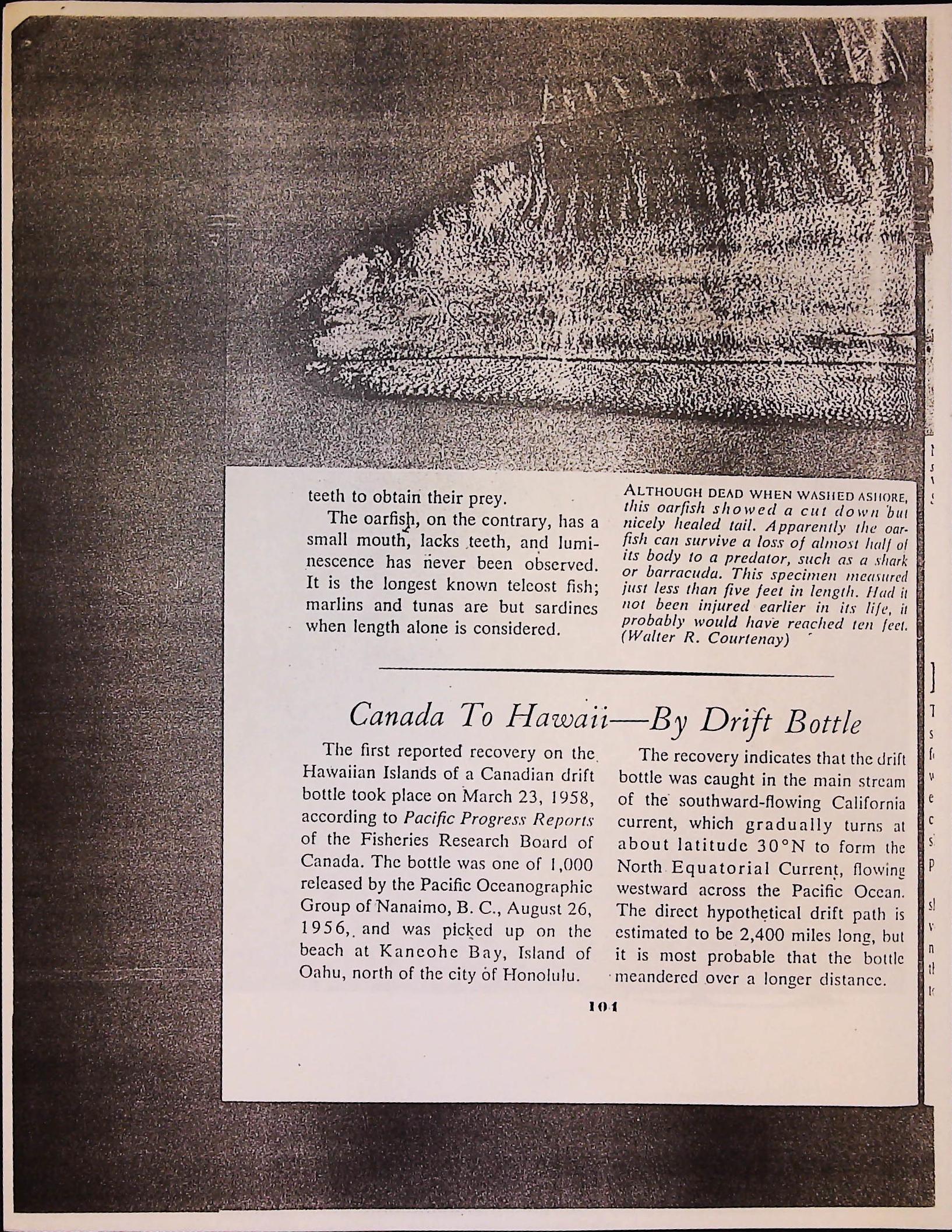
ALTHOUGH DEAD WHEN WASHED ASHORE,
this oarfish showed a cut down but
nicely healed tail. Apparently the oar-
fish can survive a loss of almost half of
its body to a predator, such as a shark
or barracuda. This specimen measured
just less than five feet in length. Had it
not been injured earlier in its life, it
probably would have reached ten feet.
(Walter R. Courtenay)
Canada To Hawaii-By Drift Bottle
The first reported recovery on the
Hawaiian Islands of a Canadian drift
bottle took place on March 23, 1958,
according to Pacific Progress Reports
of the Fisheries Research Board of
Canada. The bottle was one of 1,000
released by the Pacific Oceanographic
Group of Nanaimo, B. C., August 26,
1956, and was picked up on the
beach at Kaneohe Bay, Island of
Oahu, north of the city of Honolulu.
101
The recovery indicates that the drift
bottle was caught in the main stream
of the southward-flowing California
current, which gradually turns at
about latitude 30°N to form the
North Equatorial Current, flowing
westward across the Pacific Ocean.
The direct hypothetical drift path is
estimated to be 2,400 miles long, but
it is most probable that the bottle
meandered over a longer distance.
I
S
fi
e
C
S
P
s!
V
n

[PAGE BREAK]

1; a
Ork-
Jar-
that
few
less
Jar.
was
ano
1 al-
ces.
axi-
Fort
ider
ould
dult
´s of
for
lose
ince
ined
ano
:r in
ired
t all
very
heir
and
icn,
feet
:ely-
can
survive a loss of about half its body
to a predator, although, since the
stomach occupies almost half the
length of the tail, any greater loss
would probably prove fatal.
Too Sly For Nets
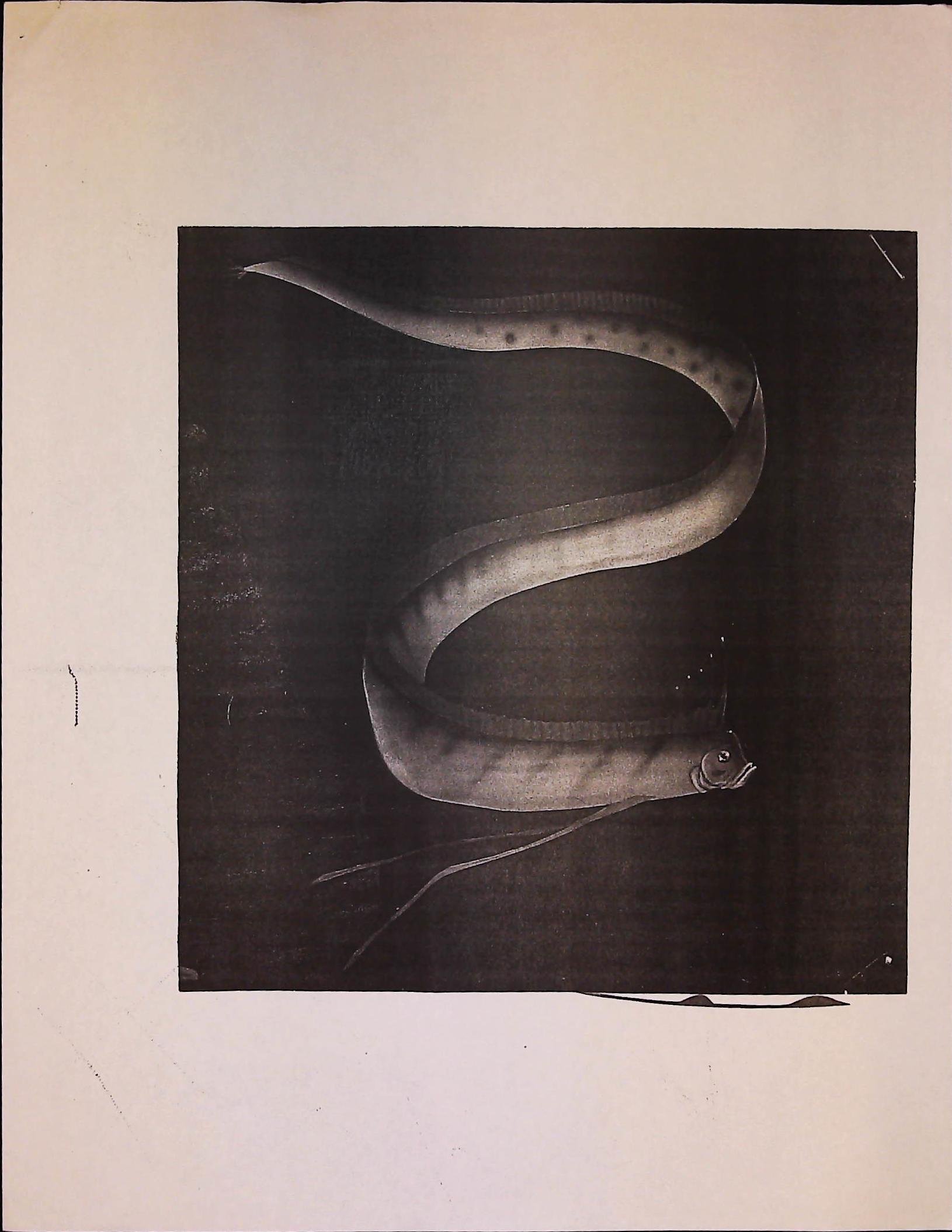
Very little is known of the life his-
tory, and habits of the oarfish.. The
which are about the size of air
gun pellets, drift in the open sea for
some three weeks before the quarter-
inch larva is hatched. It is surmised
that, owing to its well-developed eyes,
brilliant red fins, silvery body and
blue-black polka dots and slashes, and
the great reduction in the amount of
bone in the skeleton, the adult lives at
depths from 300 to 3,000 feet, where
there is still sufficient light for vision.
No adult has been taken in an
oceanographer's net, presumably be-
cause they are too agile to be captured
in such manner. On occasion larvae
and juveniles are brought up. The
larva feeds on minute crustaceans
among the plankton of the sea. The
adult favors small shrimp-like animals,
the euphausiids, which occur in enor-
mous numbers in the Deep Scattering
Layer. To gather these creatures the
oarfish has a large number of long,
spiny gill-rakers (42 to 58) which
strain the water passing over the gills.
Only Deep Sea Filter-Feeder
The oarfish is thus an anomaly
among deep sea teleosts, or bony
fishes, since it is the only one known
to be a filter-feeder. The others swal-
low food of large size in comparison
with their own bodies, and have lumi-
nous fishing lures, and wicked-looking
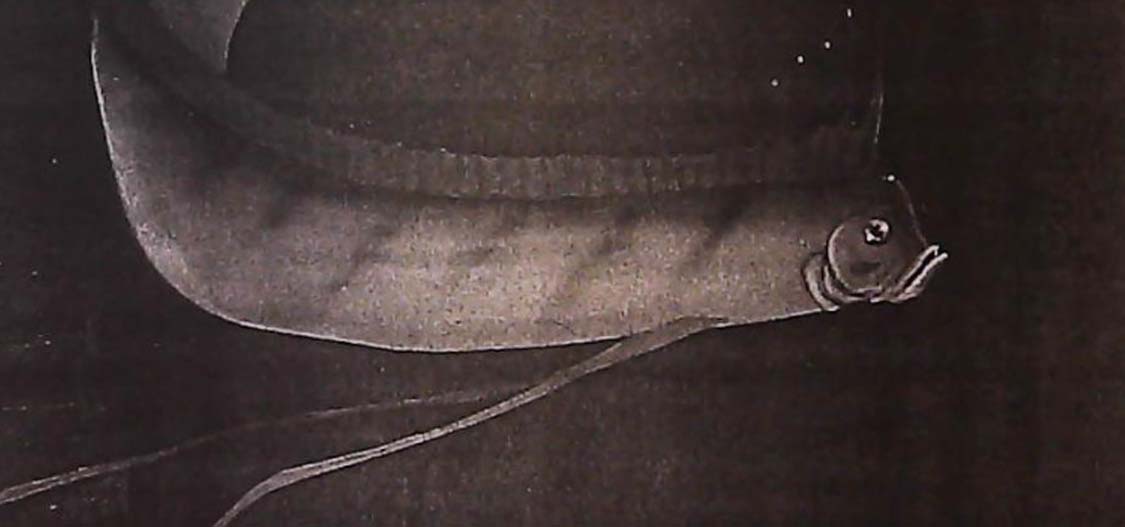
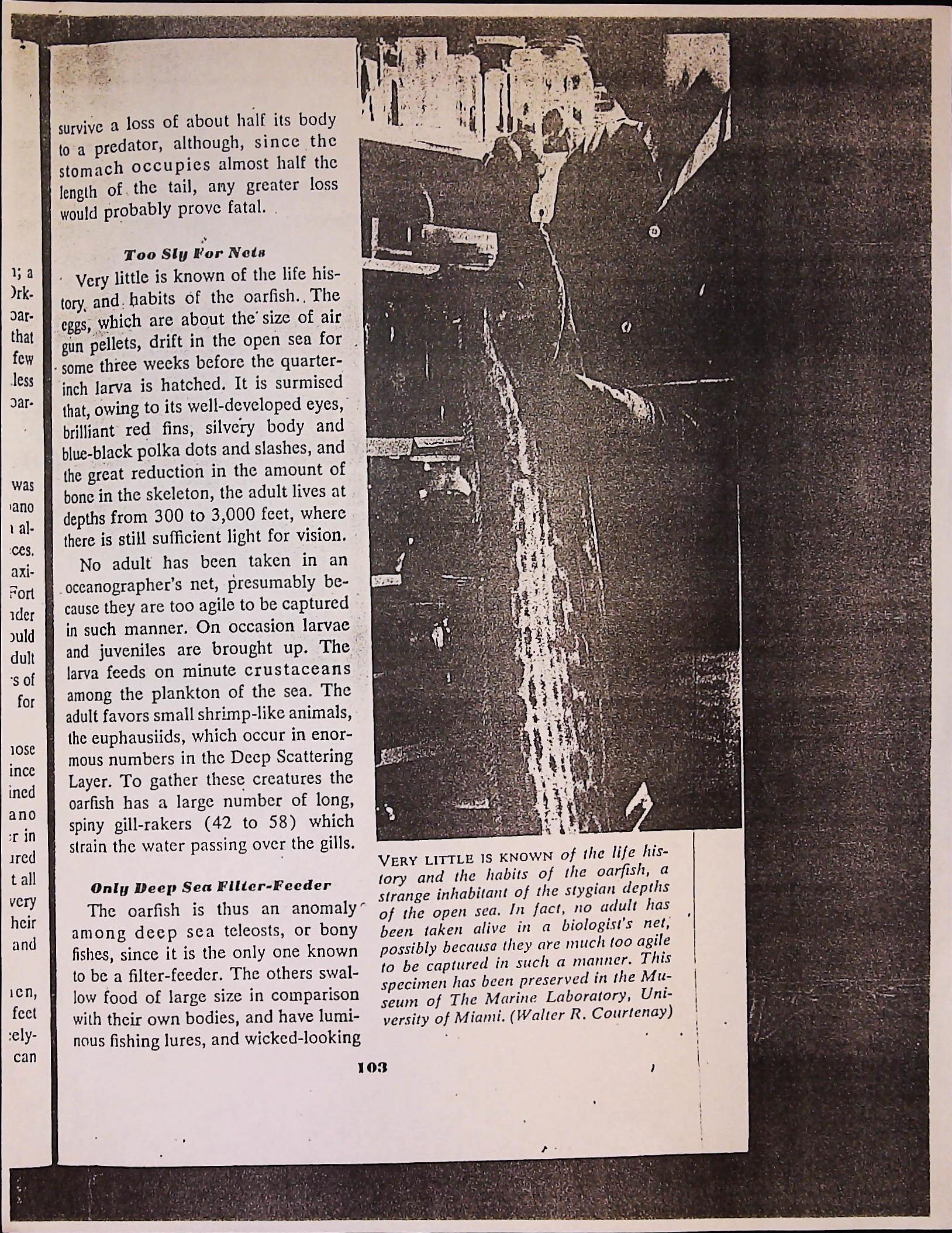
VERY LITTLE IS KNOWN of the life his-
tory and the habits of the oarfish, a
strange inhabitant of the stygian depths
of the open sea. In fact, no adult has
been taken alive in a biologist's net,
possibly because they are much too agile
to be captured in such a manner. This
specimen has been preserved in the Mu-
seum of The Marine Laboratory, Uni-
versity of Miami. (Walter R. Courtenay)
103